The global 3D printed footwear market is projected to grow from USD 4.95 billion in 2026 to USD 13.74 billion by 2032. This reflects a major shift in the footwear industry. For decades, footwear manufacturing relied on traditional cutting, gluing, and injection molding. These methods work, but they limit design freedom and produce large amounts of material waste. Additive manufacturing is breaking down those barriers.
3D printing is taking sneaker production from traditional mass manufacturing to a faster, cleaner, and highly customized future by turning digital files into physical shoes, layer by layer.
What Is 3D Printing in Sneaker Production?
Essentially, 3D printing for footwear replaces subtractive manufacturing (cutting material from a block) and traditional molding (pouring liquid into a fixed cavity) with additive production. Instead of making iron or aluminum tooling dies for every shoe size, an industrial 3D printer reads a digital CAD file and builds the object layer by layer using specialized elastomeric polymers.
Modern shoe factories are built on three basic technological pillars:
Target Components: Production is concentrated on midsoles, custom biomechanical insoles, structural uppers, and single-unit slip-on shoes.
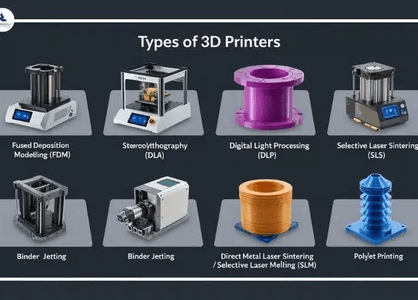
Core Printing Technologies:
-
Selective Laser Sintering (SLS) using flexible TPU powders
-
Fused Deposition Modeling (FDM) using soft filaments
-
Digital Light Synthesis (DLS) using light-curable liquid photopolymer resins
Engineered 3D Lattices: Designers replace solid, uniform foam blocks with open-air lattice structures that can be programmatically tuned to be softer or firmer in specific regions of the sole.

Such a direct digital workflow provides footwear engineers with a level of control that was simply not possible a decade ago. Instead of using standard foam with a uniform density, designers can customize a shoe down to the millimeter, removing material where needed to better support specific physical forces.
How 3D Printing Is Revolutionizing Sneaker Manufacturing
More Design Freedom
Conventional metal injection molds have very rigid mechanical restrictions, as any molded plastic part must be able to pop out of a hard metal tool without getting stuck or tearing. 3D printing eliminates these tooling constraints altogether. Designers can create complex geometric weaves, hollow internal channels, and fluid organic structures that cannot be produced using standard manufacturing methods.
In addition, additive manufacturing enables factories to consolidate multiple functional zones into one seamless piece. A stiff heel counter and a springy forefoot in a typical trainer would normally require joining two materials with chemical adhesives. Using 3D printing, an engineer can alter the thickness and geometry of internal lattice struts within the same digital file to achieve a smooth transition from rigid support to flexible cushioning without using a single drop of glue.
Better Performance and Biomechanics
Standard ethylene vinyl acetate (EVA) and polyurethane (PU) foams absorb impact by trapping air in millions of small, closed cells. However, those microcells become compressed and lose their springiness under repeated impact from running or jumping, leaving you with reduced cushioning long before the outer rubber wears out.
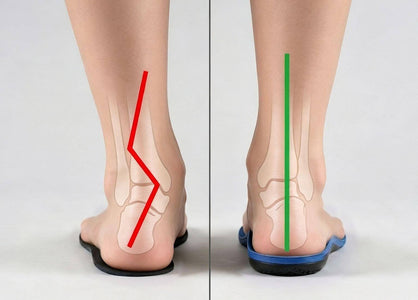
3D-printed lattice midsoles solve this with mechanical cushioning. The open lattice geometry bends, absorbs shock, and springs back into shape under physical load instead of relying on trapped air bubbles. This structural approach allows brands to fine-tune energy return exactly where the athlete needs it. For example, the struts under the medial arch can be stiffened to prevent overpronation, while the lateral heel edge can be softened to absorb the impact of heel striking. Additionally, because the lattice grid is mostly open space, it reduces unnecessary weight and provides a pathway for air to flow directly beneath the foot to improve ventilation and control heat.
Sustainability & Zero-Waste Production
Conventional trainer manufacturing produces a significant amount of waste from cutting flat sheets of fabric, stamping foam soles, and trimming excess plastic from molds. Much of this waste ends up in landfills. Additive manufacturing is inherently low-waste because the printer uses only the amount of powder or resin required to build each part.
Sustainability is about more than just reducing raw material waste during printing:
Monomaterial Recyclability: Fully printed TPU footwear eliminates the toxic glues, solvent cements, and mixed-fabric layers that make traditional trainers nearly impossible to recycle. Once a TPU shoe reaches the end of its life, it can be ground down and extruded into new printing material.
On-Demand Local Production: Shoe designs are stored as digital files in the cloud, allowing brands to produce them closer to local distribution hubs as demand arises. This localized approach reduces long-distance shipping emissions and minimizes overproduction and excess inventory.
3D Printing Challenges in Sneaker Manufacturing
High Production Costs
Despite its obvious engineering advantages, the economic barrier to widespread additive manufacturing remains high. Industrial SLS powder-bed printers and high-speed photopolymer resin systems cost several hundred thousand dollars per machine. In addition, technical materials such as elastomeric photopolymers and fine TPU powders are significantly more expensive per kilogram than conventional EVA foam pellets.
Post-processing also adds to production costs. Once a 3D-printed midsole comes out of the machine, it is seldom ready to wear. Workers or automated systems must remove excess unsintered powder, wash away uncured liquid resin, perform UV curing, and apply surface coatings. These additional production steps increase both production time and labor costs for every pair.
Material Limitations
Developing flexible polymers that provide long-term durability without adding unnecessary weight remains a challenge in material science. Elastomeric resins and TPU formulations have advanced significantly, but matching the ultra-soft, lightweight feel of modern supercritical foams, such as nitrogen-infused PEBA, with 3D lattice structures is still difficult.
To achieve the same level of softness, lattice designs often require thicker struts, which can add weight to the midsole compared to an equivalent foam unit. In addition, the material must withstand millions of high-impact compression cycles in extreme temperatures without cracking, breaking, or losing its original shape.
Scalability and Production Throughput
Speed remains the biggest bottleneck preventing 3D printing from completely replacing high-volume footwear manufacturing. A traditional foam sole can be produced using injection molding in less than three minutes, allowing a single production line to manufacture thousands of units per shift.
Printing a complex lattice midsole, however, can take anywhere from 30 minutes to several hours, depending on the printing technology and layer height. Although multiple soles can be printed simultaneously, the overall production speed is still far below the volume required for large-scale commercial releases.
Nexbie: A Leading Innovator in Digitally Native Footwear

While major athletic brands have primarily used 3D printing for premium, limited-edition releases, digitally native brands like Nexbie are integrating additive manufacturing directly into everyday functional footwear.
Nexbie’s performance models, such as the Aeroraise, replace closed-cell EVA foam with engineered TPU lattice architectures, delivering lab-tested, quantifiable advantages over traditional shoes:
|
Performance Metric |
Nexbie 3D Lattice Footwear |
Traditional EVA Foam Shoes |
Advantage |
|
Energy Return |
86% Energy Return |
~50–65% Energy Return |
Returns significantly more energy per stride for lasting comfort and reduced fatigue. |
|
Impact Absorption |
+50% Shock Absorption |
Standard baseline attenuation |
Provides better dissipation of ground reaction forces to protect lower-body joints. |
|
Thermal & Moisture Control |
80% Open Lattice |
Solid, non-breathable foam units |
360° airflow allows heat and sweat to dissipate continuously. |
|
Structural Durability |
100,000 Flex Tested |
Prone to creasing, bottoming out, & yellowing |
Glue-free unibody construction resists collapse and material degradation over time. |
Brands like Nexbie demonstrate how 3D printing is evolving from an experimental design trend into a practical and scalable solution for everyday foot health, alignment, and long-term comfort.
Conclusion
3D printing has officially evolved from a rapid prototyping tool into a transformative force in the modern footwear industry. By replacing traditional foam molds with digitally designed lattice structures, manufacturers can deliver customized performance, improved material efficiency, and a cleaner production process.
Today, high equipment costs, material limitations, and production speed continue to prevent widespread mass-market adoption. However, ongoing advances in polymer chemistry and automated printing systems are rapidly closing that gap. As printing speeds improve and material costs continue to decline, 3D printing is expected to transition from a niche technology into an everyday standard in modern sneaker manufacturing.