Most products are made in one of two ways: by building material up or by cutting material away. That is the basic difference between additive manufacturing vs subtractive manufacturing. Additive manufacturing creates a product layer by layer. Subtractive manufacturing starts with a larger piece of material and removes what is not needed. This guide explains how both methods work, where each one performs best, and why additive manufacturing matters for modern 3D printed footwear.
What Is Additive Manufacturing?

Additive manufacturing is a production method that builds a product from a digital design. Instead of cutting material away, the machine adds material only where the design needs it.
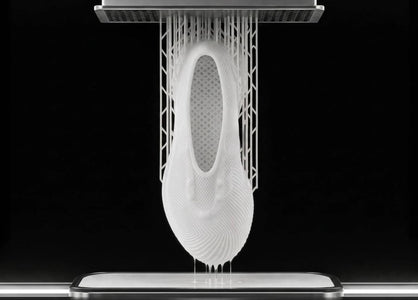
3D printing is the most common example. A digital model is prepared first. Then the printer builds the object step by step using plastic, resin, metal, ceramic, or another printable material.
The National Institute of Standards and Technology explains that additive manufacturing uses digital designs to create three-dimensional products layer by layer.
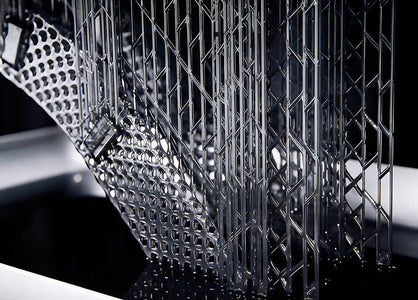
This method is useful when a product needs complex shapes, internal structures, or lightweight geometry. For example, a 3D printed shoe can use an open lattice instead of a solid foam block. That lattice can be shaped for airflow, drainage, cushioning, and support.
Additive manufacturing is also useful for testing new designs. Since the product starts from a digital file, designers can update the model without creating a new mould or cutting tool each time.
What Is Subtractive Manufacturing?

Subtractive manufacturing works oppositely. It starts with a solid block, sheet, bar, or piece of material. A machine then removes material until the final shape is left.
Common subtractive methods include cutting, drilling, grinding, milling, boring, turning, waterjet cutting, and laser cutting. CNC machining is one of the most familiar examples.
Think of it like carving. The material is already there, and the machine removes parts of it to create the final product.
Subtractive manufacturing is widely used because it can be precise, reliable, and suitable for many materials. It works well for metal parts, plastic parts, wood, tooling, molds, machine components, and products that need tight tolerances or smooth finishes.
The trade-off is that unused material is often removed as chips, dust, scrap, or offcuts. For simple parts, that may not be a problem. For complex or hollow designs, the process can waste more material or become harder to produce.
Additive Manufacturing vs Subtractive Manufacturing: Key Differences
The easiest way to understand additive manufacturing vs subtractive manufacturing is to compare how each process approaches the same goal.
|
Factor |
Additive Manufacturing |
Subtractive Manufacturing |
|
Basic method |
Builds material up |
Cuts material away |
|
Common example |
3D printing |
CNC machining |
|
Starting point |
Digital design and raw material |
Solid block, sheet, or workpiece |
|
Material use |
Often more efficient for complex forms |
Can create more scrap from removed material |
|
Design freedom |
Strong for lattices, hollow parts, and complex shapes |
Limited by tool access and cutting direction |
|
Surface finish |
May need post-processing |
Often smooth after machining |
|
Best for |
Custom designs, prototypes, small batches, complex structures |
Precision parts, repeat production, simple shapes, hard materials |
|
Setup needs |
Digital file and print preparation |
Toolpaths, fixtures, cutting tools, and machine setup |
|
Footwear relevance |
3D printed lattice shoes, one-piece structures, cushioning zones |
Cutting fabric, trimming rubber, shaping molds, tooling |
Both methods are useful. The better choice depends on the product, material, quantity, budget, and performance needs.
Advantages of Additive Manufacturing
The biggest advantage of additive manufacturing is design freedom. It can create shapes that are hard, expensive, or sometimes impossible to make by cutting material away.
This matters in footwear because shoes are not just flat objects. A good shoe needs cushioning, airflow, flexibility, grip, support, and shape. Additive manufacturing can combine some of those needs into one printed structure.
|
Advantage |
Why it matters |
|
Complex geometry |
Useful for lattice structures, internal channels, and curved forms |
|
Less material waste |
Material can be placed only where needed |
|
Faster design changes |
Designers can update the digital model without changing a mould |
|
Customisation potential |
Shapes can be adjusted for different sizes, use cases, or support zones |
|
Small-batch production |
Useful when producing limited runs or testing new ideas |
|
Part consolidation |
Several functions can be combined into one printed form |
Additive manufacturing is not automatically better for every product. But when the product needs complex geometry, digital flexibility, and precise material placement, it can be a strong option.
Advantages of Subtractive Manufacturing
Subtractive manufacturing still has major strengths. It is not outdated. In many industries, it remains one of the best ways to produce accurate, durable parts.
It can work with a wide range of materials. It can also achieve smooth surfaces and tight measurements when the machine, tools, and setup are right.
Key advantages include:
|
Advantage |
Why it matters |
|
Precision |
Useful for parts that need tight tolerances |
|
Surface finish |
Machined parts can come out smooth and clean |
|
Material range |
Works with metals, plastics, wood, composites, and more |
|
Repeatability |
Good for making the same part many times |
|
Strength |
Useful for solid parts that need high structural performance |
|
Established process |
Widely understood and used across manufacturing industries |
Subtractive methods are especially strong when the product is simple, solid, and needs consistent dimensions. For example, metal brackets, machine parts, tooling, and molds often make sense through subtractive manufacturing.
Which Process Is Better?

The honest answer is simple: it depends.
The difference between additive and subtractive manufacturing is not that one process is good and the other is bad. It is about choosing the right method for the job.
|
Need |
Better fit |
|
Complex lattice structure |
Additive manufacturing |
|
Smooth machined metal part |
Subtractive manufacturing |
|
Fast early prototype |
Additive manufacturing |
|
Large solid part |
Subtractive manufacturing |
|
Custom small-batch product |
Additive manufacturing |
|
Simple repeated industrial part |
Subtractive manufacturing |
|
Lightweight internal structure |
Additive manufacturing |
|
Tight tolerance machining |
Subtractive manufacturing |
|
Traditional cutting and finishing |
Subtractive manufacturing |
|
Digital footwear structure |
Additive manufacturing |
In many cases, companies use both. A product may be 3D printed first and then machined, polished, cleaned, or finished later. This is called a hybrid approach.
Why 3D Printed Shoes Are a Strong Example of Additive Manufacturing
3D printed shoes are one of the easiest ways to understand additive manufacturing because the structure is visible. You can often see the lattice, openings, curves, and support zones directly in the shoe.
Traditional footwear is usually built from many separate parts, such as fabric panels, foam layers, rubber soles, stitching, adhesives, lining, and trims. That method works well, but it can limit how much functionality is built into the shoe's structure.
With additive manufacturing, a shoe can start as a digital design. The printed form can then be shaped for airflow, cushioning, drainage, flexibility, and support.
Lattice Structures Make the Difference
A lattice is not only a visual pattern. It can affect how the shoe bends, compresses, breathes, and recovers during movement.
One area can be more open for ventilation. Another area can be denser for support. A third area can be shaped to flex more easily. These design choices can be adjusted digitally before printing.
That does not mean every 3D-printed shoe is automatically better than a traditional shoe. The final result still depends on material quality, fit, outsole grip, comfort, testing, and finishing. Additive manufacturing simply gives designers more freedom to create shapes that are difficult to build with only cutting, stitching, and gluing.
Where Traditional Methods Still Matter
Subtractive manufacturing still has value in footwear. It can help with cutting fabric panels, trimming rubber parts, shaping molds, making tools, refining surfaces, and finishing components.
This is why the comparison is not about one method completely replacing the other. Additive manufacturing is strong for complex printed structures. Subtractive manufacturing is still useful for precision, finishing, tooling, and repeatable production steps.
The better choice depends on what the shoe needs to do.
How Nexbie Uses Additive Manufacturing in Everyday Footwear

At Nexbie, we use additive manufacturing to create footwear that feels different from ordinary cut-and-assembled shoes.
Nexbie 3D printed shoes include sneakers, slippers, kids’ shoes, and casual styles built around open lattice structures and everyday comfort.
Designed Around Real Use
Depending on the model, our shoes may include breathable construction, cushioned support, quick-drain design, adaptive fit, lightweight movement, easy cleaning, and fewer conventional stitched or glued layers.
The goal is not to make shoes look technical for its own sake. The goal is to use 3D printing where it improves the wearing experience.
A recovery slipper may focus on ventilation and relaxed comfort. A kids’ shoe may focus on washability, grip, and flexible support. A daily sneaker may focus on cushioning, breathability, and adaptive movement.
That is the strength of additive manufacturing in footwear. The same digital design approach can be adapted to different routines rather than forcing every shoe to follow the same structure.
Frequently Asked Questions
Q: Is 3D printing additive or subtractive manufacturing?
A: 3D printing is additive manufacturing. It creates a product by adding material based on a digital design, usually layer by layer.
Q: Is CNC machining additive or subtractive?
A: CNC machining is a form of subtractive manufacturing. It uses computer-controlled cutting tools to remove material from a larger piece.
Q: Which process creates less waste?
A: Additive manufacturing can create less material waste for complex designs because it places material only where needed. Subtractive manufacturing often produces more scrap because it removes unused material. Actual waste still depends on the design, material, and process.
Q: Why is additive manufacturing used in shoes?
A: Additive manufacturing allows shoe designers to create open lattice structures, flexible zones, cushioning areas, and quick-drain designs. These features can be difficult to create with only cutting, stitching, gluing, and molding.
Q: Is additive manufacturing always better than subtractive manufacturing?
A: No. Additive manufacturing is better suited to some products, while subtractive manufacturing is better suited to others. Additive methods are strong for complex and custom designs. Subtractive methods are strong for precision, smooth finishes, and many solid industrial parts.
Conclusion
Additive manufacturing vs subtractive manufacturing comes down to one simple difference. Additive manufacturing builds. Subtractive manufacturing cuts.
Both methods matter. Subtractive manufacturing is still valuable for precision parts, smooth finishes, and solid materials. Additive manufacturing is powerful when the product requires complex geometry, lightweight design, digital flexibility, and minimal material waste.
For footwear, additive manufacturing opens the door to shapes that traditional methods struggle to create. That includes breathable lattice structures, cushioning zones, flexible forms, quick-drain designs, and shoes built from digital ideas rather than many separate layers.
That is why we use 3D printing to create footwear that feels different from conventional shoes. It is not just a new way to make shoes. It is a new way to design comfort from the structure up.