

The standard advice you will find on the internet when searching for how often should you replace running shoes is 300-500 miles. This range has been treated as an industry rule of thumb for decades, but it is a pretty wide range. A 200-mile gap is huge. More importantly, the shoe industry has evolved a lot since this classic guideline was established. With modern shoes ranging from super foams to advanced 3D printed lattices, a single mileage rule no longer applies to every runner. While tracking distances gives you a starting benchmark, you should also look for signs of physical wear, which we will discuss in this article.
How Often Should You Replace Your Running Shoes?
As stated above, the general rule of thumb that has been followed for a long time is replacing your shoes every 300 to 500 miles (500 to 800 km), or roughly every 4 to 8 months if you run regularly.
However, how often you should replace your running shoes depends primarily on your weekly training volume:
-
Casual Runners (Under 10 miles / ~16 km per week): Replace every 8 to 12 months.
-
5K to 10K Trainers (10–20 miles / 16–32 km per week): Replace every 5 to 8 months.
-
Half Marathon Trainers (20–40 miles / 32–64 km per week): Replace every 4 to 6 months.
-
Marathon Trainers (40+ miles / 64+ km per week): Replace every 2 to 3 months.
While these numbers provide a solid starting point, other factors also matter. Your shoes may last longer or wear out sooner depending on where you run and how the shoe is built.
Understanding the Mileage Rule (Treadmill vs. Road)
When asking how often you should change your running shoes in km or miles, the surface you run on also plays a role. It directly impacts where your shoes fall on the spectrum of 300-500.
Treadmill vs. Road Lifespans
-
Treadmill Running: Your running shoes last significantly longer if you run primarily on a treadmill. Because it has a smooth belt that generates almost zero rubber friction, the outsole tread looks new even after 500 to 550+ miles (800 to 900 km). However, because your foot strikes in the same uniform pattern on every stride, internal midsole foam still compresses over time under your body weight.
-
Road Running: Concrete and asphalt act like sandpaper on rubber outsoles. Hence, the answer to how often you should replace running shoes lands right at the 300- to 500-mile range.
-
Trail Running: Trail running is different from using a treadmill or pavement, but the specific type of trail matters just as much. Soft dirt trails do little damage to the upper and protect midsole cushioning, whereas rock, gravel, or mud trails tear off bottom rubber lugs long before the cushioning wears out.
Physical Signs Your Running Shoes Are Worn Out
Physical signs are a reliable indicator that it's time for a new pair. You can check your shoes using two quick tests:
-
The Sidewall Crease Test: Press your thumb firmly into the side of the midsole foam. If the foam feels hard, dense, and shows deep horizontal wrinkles that do not bounce back, the internal cushioning has collapsed.
-
The Flat Table Test: Place your shoes on an even table at eye level. If either shoe tilts or leans to one side, the sole has worn unevenly. Running on a tilted base forces your ankles and knees out of alignment.
Your body will also give you clear warning signs. If you notice unexpected knee, shin, or lower back soreness after routine runs or suddenly develop new blisters and hot spots, it means your shoes are no longer absorbing impact properly.

Why Running Shoes Break Down Fast
Most standard running shoes fail quickly because of the following major construction weaknesses:
Foam Compression: Traditional Ethylene-Vinyl Acetate (EVA) foam relies on trapped air pockets. Over hundreds of foot strikes, these air pockets permanently flatten out and lose their bounce.
Glued Seam Separation: Standard shoes use liquid adhesives to join 15 to 20 separate parts. Sweat, rain, heat, and repeated foot flex break down these glue lines, causing outsoles to peel away from the upper mesh.
Nexbie Aeroraise: Engineered for Long-Term Durability
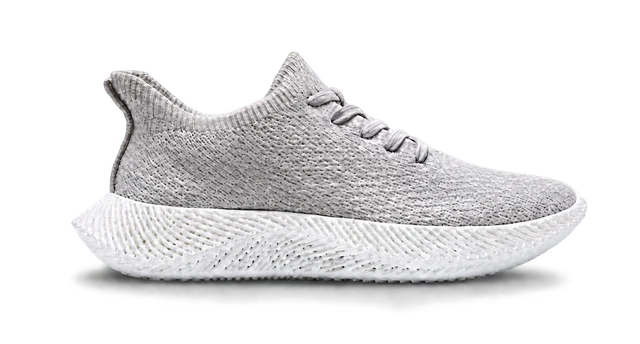
Running shoes endure relentless impact forces, repeated foot flex, and changing weather conditions that test structural integrity over time. The Nexbie Aeroraise 3D printed shoes tackle these durability challenges through a single-piece 3D-printed construction that maintains its shape, support, and responsiveness across high-mileage training.

150,000 Flex Cycle Durability
Bending a shoe thousands of times on every run causes materials to fatigue, crack, or crease permanently across the toe box. Standard EVA foam typically lasts between 20,000 and 50,000 flex cycles before structural failure, causing traditional running shoes to wear out after just 3 to 6 months of heavy use. In contrast, the Nexbie 3D-printed structure is tested to withstand 200,000+ cycles, allowing it to comfortably last 2+ years without losing its shape, cracking, or breaking down under stress.
Dynamic Arch Support
As standard EVA foam breaks down, you gradually lose structural arch support, which alters your foot strike and places extra strain on your joints. The Aeroraise solves this with 3D Dynamic Arch Support that adapts to your foot throughout your entire movement. By maintaining continuous upward lift as you move, it prevents early arch fatigue and keeps your natural stride balanced throughout long runs.
High-Impact Shock Absorption
When you run, your foot lands on the same spots, usually the heel or the front of your foot over and over again. In standard shoes, that constant pressure crushes the material in those exact areas, making them flat and stiff over time.
The Aeroraise uses an open lattice design that works like a web under your foot. When you step down, it spreads the impact force evenly across the entire sole instead of letting it stack up in one spot. Because the pressure gets shared across the whole shoe, the cushioning holds its shape and keeps its spring much longer.
Frequently Asked Questions
How often should you change your running shoes in km?
Standard running shoes should be replaced every 500 to 800 km. But this is a broad range and varies with different factors such as running ground, weight of the person, running style etc.
How often should you replace running shoes treadmill runners use?
Treadmill shoes typically last 600 to 900 km (350 to 550 miles). Because smooth treadmill belts generate minimal rubber friction, outsoles look new longer, though internal foam still compresses over time.
Are 10-year-old running shoes still good if never worn?
No. Unused shoe foams oxidize, harden, and lose flexibility over time, while internal adhesives dry out and yellow, causing soles to detach upon first use.
When to throw out old running shoes?
Retire shoes when outsole tread wears smooth, sidewall foam shows deep permanent creases, shoes tilt on a flat surface, or you feel new post-run joint aches.
Will I ruin my running shoes if I walk in them?
No, walking in your running shoes won't instantly ruin them. But it will significantly shorten their usable running lifespan.
Conclusion
The traditional rule of thumb suggests replacing running shoes every 300 to 500 miles (500 to 800 km). But this is a wide range and varies a lot depending on your specific shoes, running surface, or landing mechanics. While tracking mileage gives a good idea, you should also look for physical signs of wear. Commonly, traditional running shoes last for 3-6 months. But Aeroraise 3D printed shoes maintain structural integrity after 200,000+ flex cycles, which means they are built to last 2+ years.