Most people read labels on food and even on skincare products. But shoes? Not often. And that’s a problem. Your feet spend every day, all day, in shoes, pressed against materials most brands don’t want you to know about. In 2024, a safety test by South Korean authorities found that one pair of children’s shoes contained phthalates at 428 times the permitted level, the highest concentration ever recorded in those tests. This is not a rare case. It shows how little regulation and transparency there is in the footwear industry.
Non-toxic shoes are not just a trend; they are a better choice. In this article, we will break down what’s actually in your shoes, what to avoid, and what to look for instead.
What Makes a Shoe "Toxic" in the First Place?
Shoes go through a lot before they get to you. Tanning, dyeing, gluing, coating, and finishing—each step can add chemicals. There is no labeling requirement for footwear, unlike clothing, so it is almost impossible to find out what materials are in your shoes, let alone the chemicals used in the manufacturing process. Here are the biggest offenders found in shoes:
PFAS (Forever Chemicals)
PFAS stands for per- and polyfluoroalkyl substances. These are used in waterproof and water-resistant shoes to keep out moisture. Sounds useful, but the thing is, they don't go away. Ever. These toxic synthetic chemicals never break down; they linger in the environment and enter the food chain, which is precisely how they earned the nickname “forever chemicals.” Four out of six shoes tested from Wolverine Worldwide brands, including Keds and Hush Puppies, contained PFAS, according to scientists from the University of Notre Dame and the Ecology Center.
Risk:
- Hormone disruption
- Immune system damage
- Increased cancer risk due to long-term exposure
Phthalates

Phthalates are put into plastics to make them softer and more flexible. They are found in synthetic soles, PVC uppers, and some dyes. Basically everywhere in cheap shoes. This is especially troubling when it comes to non-toxic shoes for kids; kids’ bodies are more susceptible to chemical exposure.
Certain phthalates are classified as reproductive toxicants and endocrine disruptors. And we’re not talking trace levels. A study by the Danish Consumer Council found that 9 out of 16 pairs of shoes tested had illegal levels of harmful substances, including phthalates, with the worst offenders coming from online platforms such as AliExpress, Shein, and Temu.
Risks:
- Disruption of hormones
- Fertility problems
- Developmental problems in children
Heavy Metals
Leather shoes are especially dangerous here. About 80 to 85 percent of the leather produced is tanned with chromium. It is a heavy metal that can accumulate in the body and cause skin rashes, nasal irritation, and respiratory illness. Another is lead. You’ll find it in dyes and pigments, particularly in brightly colored shoes. This is especially important if you are shopping for non-toxic shoes for toddlers. There is no safe level of lead exposure for young children.
Risks:
- Skin irritation
- Respiratory problems
- Organ damage
- Cancer risk (with prolonged exposure)
VOCs
VOCs are mainly emitted from adhesives and solvents used in shoe assembly. The chemical smell of a new pair of shoes? That's VOCs off-gassing. A 2024 study of shoe industry workers found that even low-level exposure to a mix of VOCs—aromatic hydrocarbons, ketones, and esters—led to measurably greater oxidative stress compared to unexposed people. Formaldehyde, used in some leather tanning and some synthetic materials, also belongs to this group.
Risks:
- Headache
- Respiratory system irritation
- Oxidative stresses
- Organs can be damaged over time
How Do These Chemicals Get into Your Body?
Here are three main ways.
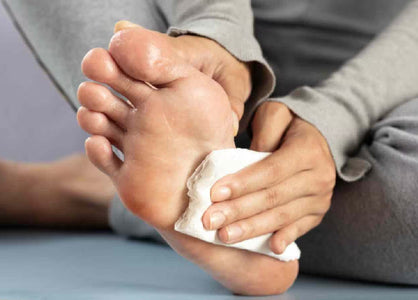
1. Skin absorption: Your feet sweat, pores open up, and chemicals are absorbed more easily. And blisters or cuts make it worse.
2. Off-gassing: VOCs and formaldehyde are released into the air around you. You inhale them without knowing it.
3. Indirect ingestion: Mostly relevant for kids who touch their shoes and put their hands in their mouths.
How to Choose Non-Toxic Shoes
The biggest thing to think about when buying non-toxic shoes is how the shoe is made, not just how it looks. A lot of products can claim to be natural or vegan but can still have hidden chemicals in adhesives, dyes, or coatings. Here are a few things you can check when buying non-toxic shoes:
- Third-party testing and certifications, such as EU REACH and OEKO-TEX: When you're looking at non-toxic shoe brands, that certification is one of the most reliable indicators you can find. It is helpful to confirm the materials have been tested for harmful substances.
- Materials to avoid: PVC, EVA, phthalates, BPA, formaldehyde, and heavy metals such as lead and chromium deserve closer attention. If you're comparing conventional footwear materials, our guide on is EVA/PVC toxic in shoes goes into the potential concerns in more detail.
- Adhesives and dyes: Many shoe glues have toxic solvents. Look for natural water-based adhesives that are safer.
- Natural Materials: Synthetic materials such as natural rubber, vegetable-tanned leather, organic cotton or hemp, cork, and sugarcane-based or bio-based EVA are safe.
Best Non-Toxic Shoes for Everyday Wear

As awareness of chemical exposure in everyday footwear grows, consumers are beginning to look beyond comfort and durability. Now, material safety, emissions, and long-term skin contact are becoming as important as design. Nexbie 3D printed shoes are a reflection of this approach, focusing on cleaner materials and a more controlled manufacturing process.
Nexbie uses HALS DLP printing technology, which means each shoe is made in one go with an open lattice structure. No layers, no sewing, no assembly. This process alone removes what most shoes rely on to hold them together: toxic adhesives, solvent-based glues, PFAS waterproofing coatings, and chrome-tanned leather. Nexbie uses innovative PU material, which is one of the safer synthetics and does not need plasticizers.
Safety Certifications & Testing:
The Nexbie 3D printed shoes have been tested and comply with rigorous international safety standards. The emphasis is on ensuring the material is safe for everyday skin contact and that no harmful chemicals are used.
- It meets California Proposition 65 (CP65) and EU REACH regulations. This means there are no restricted levels of harmful substances such as phthalates.
- The product has also been tested for SVHC (Substances of Very High Concern) for REACH, which confirms that no chemical additives with high risk are used during production.
- Tests have also been conducted to ensure that there are no toxic heavy metals and no harmful residues of solvents in the shoes, reducing the chances of skin irritation with prolonged wear.
- It has no VOC (volatile organic compound) emissions. Hence, it does not smell like traditional EVA-based shoes.
For complete test reports and certification information, please visit the product certification page.
Frequently Asked Questions
Q: What shoes are non-toxic?
A: Non-toxic shoes are made without PFAS, phthalates, PVC, and toxic glues. The safest brands are those that use TPU, natural rubber, or vegetable-tanned leather, with third-party chemical certification.
Q: What is the healthiest material for shoes?
A: The healthiest materials are natural rubber, vegetable-tanned leather, organic cotton, and TPU. They require little or no toxic chemical processing compared to synthetic alternatives.
Q: Are vegan shoes non-toxic?
A: Not always. Vegan just means no animal products. Still, many vegan shoes are made with PVC and heavy-duty synthetics. Always check the certifications.
Conclusion
Your shoes touch your body for hours every day, and studies show that footwear can really affect your overall health. Many people don't realize that traditional shoes can contain toxic dyes, coatings, and adhesives.
Knowing what is in your footwear can help you make more informed choices, especially if you will be wearing it long-term or daily. Nexbie's lineup is a good place to start, as it uses non-toxic PU material.