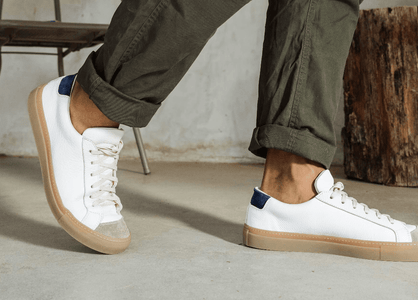
Walking seems easy until you start experiencing pain in your feet by midday, and that's usually a shoe problem, not a fitness problem. Some people wear shoes that are comfortable enough at the store, then wonder why their arches or heels hurt after a few hours. The right walking shoes have cushioning, structure, and weight that contribute a lot to how your feet perform. In this article, we will discuss five walking shoes that you should consider and what actually makes a shoe good for walking versus running.
5 Best Walking Shoes for Long Walks and Daily Wear
Before looking at the individual shoes, we focused on the features that matter most for walking: arch support, shock absorption, cushioning, stability, weight, fit, flexibility, traction, breathability, and durability. We also compared measurable specifications such as heel-to-toe drop, stack height, shoe weight, midsole construction, outsole coverage, and available width options.
A good walking shoe should support the foot through repeated steps, soften heel and forefoot impact, remain stable as weight shifts forward, and feel comfortable after several hours rather than only during the first few minutes of wear. For people who walk or stand for long periods, we also gave extra attention to how well the cushioning holds its shape, how much room the toes have, and whether the outsole provides reliable grip across everyday surfaces.
1. Nexbie Aeroraise
Unlike most walking shoes built from layers of foam, fabric, and rubber, the Nexbie Aeroraise 3D printed sneaker uses a one-piece 3D-printed lattice structure. The support and cushioning are built directly into the shoe, with a denser structure under the arch, firmer support around the heel, and softer cushioning under the forefoot.
Aeroraise 3D Printed Sneakers
$159.00$229.00
- Built-in dynamic arch support with a denser lattice under the arch
- Elastic cushioning with 50% greater shock absorption
- 86% energy return for responsive support while walking
- One-piece 3D-printed construction designed to maintain its shape

For walking and long hours on your feet, this construction helps distribute support where your foot needs it most. The built-in arch structure helps keep the foot supported during repeated steps, while the elastic lattice absorbs impact as your heel hits the ground. With 86% energy return and 50% greater shock absorption, the sole compresses under pressure and rebounds as you move forward, helping reduce the heavy, tired feeling that often develops after extended walking or standing.
Durability is another advantage for frequent walkers. Unlike conventional foam that gradually compresses and develops soft spots, the printed lattice is designed to retain its shape. Testing showed 92% performance retention after 100,000 flex cycles, making Aeroraise a strong option for people looking for walking shoes that maintain their cushioning and support over repeated wear.
The open lattice also provides 360° airflow, which helps keep feet cooler during long walks, warm-weather travel, or full days spent standing.

Pros
-
Supportive underfoot feel for long periods of walking and standing
-
Responsive cushioning helps absorb repeated impact
-
Durable lattice structure resists the compression common in traditional foam
Cons
-
The distinctive 3D-printed lattice looks less traditional than a standard walking sneaker
-
The open construction offers less insulation in cold weather
Hoka Clifton 10

This version feels different from older Cliftons right away. The biggest change is the increase from a 5mm to an 8mm drop. You'd think that much padding would feel wobbly, but it doesn't, mostly because the midsole is firmer than plush. However, the important thing to keep in mind is that the support on the shoe's sides is rather limited. If your foot tends to roll inward or outward as you step, you'll probably notice it here.
Main features
-
8mm heel-to-toe drop
-
More cushioning in the heel than in previous versions
-
Weight: 9.8 ounces for men and 8 ounces for women
-
A firm midsole that helps your foot roll forward
-
Available in standard, wide, and extra-wide sizes
Pros
-
Good level of cushioning for people who are on their feet for long stretche
-
The rocking design minimizes the pressure on your calves while walking
Cons
-
Not much side support, which may be important if your foot rolls while walking
-
Feels firmer underfoot
-
Not very good grip on wet pavements.
On Cloud 6

The Cloud 6 is not trying to be the most cushiony shoe in this list and honestly, that's its whole appeal. It has a stack of 30mm in the heel and drop of 10mm, and it feels firmer than what other shoes offer, such as Hoka. Some reviewers were let down expecting the "Cloud" name to mean pillow-soft, but that firmness is actually why it doesn't feel unstable or wobbly on your feet. The shoe is really great for travelling and daily activities, because it is lightweight and easy to wear.
Main features
-
30mm heel stack, 10mm drop
-
CloudTec cushioning pods with a firmer, more grounded feel than most "max cushion" shoes
-
Weight: about 10 oz men's, 8.4 oz women's
-
Speed-lace system for quick on/off
-
Rubber patches at heel and toe, foam-only midfoot
Pros
-
Lightweight, convenient to wear, ideal for travel purposes
-
Gives a firmer ride to maintain stability
-
Spacious toe box gives enough space for the toes
Cons
-
Lacks sufficient cushioning for extended periods of standing or walking
-
Midfoot is not made of full rubber material, which gives less grip than the heel or the toe
Nike Pegasus 41

It's been nearly four decades since Pegasus was first introduced, and honestly, it feels like it.
The heel has an adequate amount of cushioning (38 mm stack), while the forefoot gets noticeably less (25 mm). That imbalance means it favors people who land on their heel when they walk. The toe box itself is also surprisingly narrow, making it less comfortable for extended walking, especially if you choose to wear the standard width.
Main features
-
38mm heel stack, 25mm forefoot stack, 13mm drop
-
ReactX foam midsole with embedded Air Zoom units in heel and forefoot
-
Weight: about 1 lb 2.8 oz men's, 15.4 oz women's (per pair)
-
Engineered mesh upper, more breathable than earlier versions
-
Standard and extra-wide fits available
Pros
-
Reliable, consistent ride that works fine for daily walking and errands
-
Breathable mesh upper holds up well in warm weather
-
Durable outsole, tends to outlast the cushioning underneath it
Cons
-
Narrow toe box unless you buy the wide version
-
Lack of cushioning in the forefoot makes it less favorable for forefoot walkers
Hoka Bondi SR

Bondi SR has been made for workers who stay on their feet throughout shifts—nurses, waiters, bartenders, and so forth. It has a water-resistant leather upper, a slip-resistant outsole made of rubber, and it has received a seal of approval from the American Podiatric Medical Association. In lab tests, Bondi SR required about twice as much force as the average shoe just to bend it sole at all—showing its firmness and reliability. However, the firmness of Bondi SR means that it is not that flexible either and is not suitable for walking fast or on uneven ground.
Main features
-
Water-resistant leather upper, full-coverage slip-resistant rubber outsole
-
APMA Seal of Acceptance for foot health
-
Weight: about 14.3 oz per shoe (men's size 9)
-
Thick EVA midsole, among the most cushioned in Hoka's lineup
-
Available in wide sizing for some versions
Pros
-
Excellent slip resistance, built for wet or oily indoor floors
-
Long-lasting cushioning that holds up through full shifts
-
Easy to wipe clean thanks to the leather upper
Cons
-
Heavier and bulkier than most walking shoes, which can feel tiring on faster walks
-
Stiff sole takes noticeably longer to break in than lighter shoes
-
Wide base can feel a little unsteady on stairs or uneven ground until you adjust
FAQs
Q: What is the best brand of shoes for walking?
A: There is no single brand that can be universally declared the best. Different brands focus on different features. Ultimately, it comes down to your specific needs.
Q: What shoes do doctors recommend for walking all day?
A: When it comes to shoe recommendations, podiatric experts prefer footwear that has received the APMA Seal of Acceptance because it shows that the shoe has been assessed regarding the health of the feet.
Q: What are the best walking shoes for senior citizens?
A: Stability matters more than plushness at this stage. A softer, high-stack shoe can actually feel less secure underfoot, so something firmer with good slip resistance tends to be the safer choice.
Conclusion
A twelve-hour hospital shift and a weekend of sightseeing put completely different demands on a shoe, which is why there's no single "best" pick here. If you're standing on wet or greasy floors for hours, the extra weight of the Bondi SR earns its keep through the slip resistance alone. If you're moving fast through airports or errands, something lighter like the Cloud 6 makes more sense, even if it means giving up some cushioning. The Clifton 10 sits in the middle for people who want one shoe that handles most days without much compromise. If you work in warm and humid environments, the Aeroraise is worth considering because its 3D printed construction makes it more breathable and fast-draining.