

In pretty much any shoe, your feet can get hot and sweaty, and most people blame it on their socks or the weather. But the real problem is usually shoe breathability, or the lack of it. This guide discusses what really makes a shoe breathable, why most shoes aren’t breathable, and how 3D-printed construction solves the problem in a very different way.
What Actually Makes a Shoe Breathable
Many people think that shoe breathability is just about having some mesh panel somewhere in the fabric, but it’s really a combination of a few things working together.
-
Airflow. Air needs a real pathway through the shoe, not just a place to sit by your foot.
-
Moisture movement. Sweat has to go somewhere. If it is trapped with no way to escape, your foot stays damp no matter how the shoe looks on the outside.
-
Sole ventilation. This is the part that most people totally miss. The sole is pressed against your foot for much of the time you’re walking, and that’s usually where heat stays trapped the longest. Everybody focuses on the top of the shoe.
-
Material structure. Dense, solid materials block airflow simply by being present. Open, connected structures let air actually flow through rather than stopping at the surface.
Add those four things together and you start to see that shoe breathability is not really about the fabric at all. It’s about whether air and moisture have somewhere to go once they get inside the shoe.
Why Traditional Shoes Struggle With This
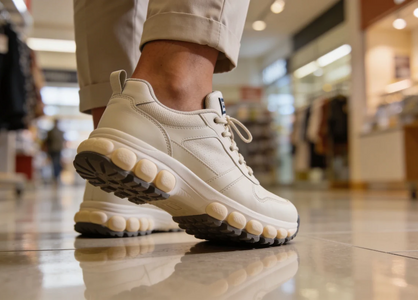
Most sneakers are based on a molded foam sole. Foam is dense by design. It’s made as a solid block, so there’s no internal channel for air to flow through it, and that’s without even talking about what’s over the top of the foot.
Then there’s the actual shoe construction. A traditional shoe has three layers:
-
the insole,
-
midsole,
-
and outsole.
These parts are assembled, stacked, and glued together. More layers mean more solid material and fewer gaps for air to pass through. So if the upper of the shoe looks breathable, it doesn’t mean it is. It still sits on a sealed, solid base underneath that doesn’t allow heat to escape. When you’re looking for breathable shoes for men, the same problem arises: most men’s sneakers, regardless of how the shoe is marketed, have that same dense foam base.
That is why it is so hard to find breathable shoes for sweaty feet. They might look breathable on the outside, but if the sole underneath is one solid mass, heat and moisture build up anyway. Your foot is then trapped in a warm, moist space for hours, and that is generally when things start to get uncomfortable and smell worse by the end of the day.
How 3D Printed Shoes Tackle This Differently
This is where the mechanics start to change, not just the materials.
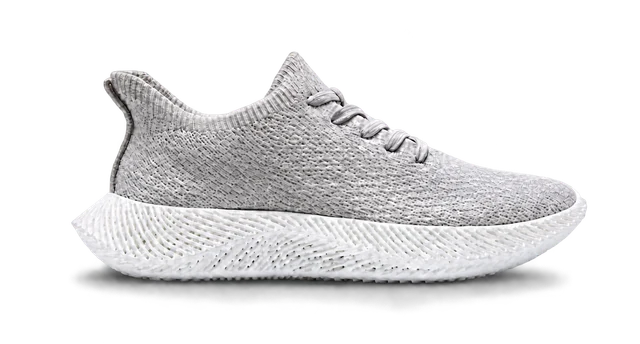
With 3D printing, rather than making one solid block of foam, the sole is built layer by layer, creating real, engineered gaps throughout the whole structure rather than one solid mass. This is generally called a lattice, which is basically a connected framework of material with open space built in intentionally, not as a consequence of manufacturing.
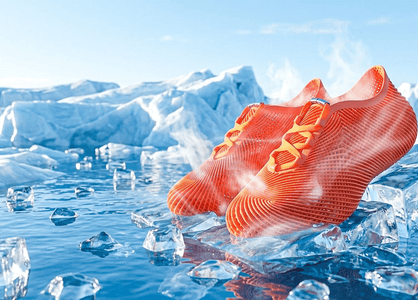
That open space is more important than it seems. You get airflow through the sole itself, not just around the edges by your foot. So rather than heat being trapped at the bottom of the shoe, right where your foot is pressing down all day long, it actually has somewhere to go.

Moisture works in the same way. Instead of pooling up hour after hour, sweat has open channels to move through and evaporate out rather than being trapped against a solid base. This is really the core of why 3D-printed shoes handle shoe breathability so differently from regular sneakers. This isn’t a fabric swap or a design tweak; this is a structural change to the one part of the shoe that traditional footwear never quite solved.
Why Nexbie Aeroraise Gets This Right
Nexbie Aeroraise 3D-printed shoes are built from the ground up to solve this, not as an afterthought.
-
3D-printed lattice sole. The entire sole has open gaps connected throughout, so air can flow through the shoe as you walk rather than getting trapped under your foot.
-
Quick-drain design. Any moisture that does build up has somewhere to go rather than being trapped inside for hours after you’ve been sweating.
-
One-piece construction. Because it’s printed as a single piece and not glued together from different parts, there are no sealed seams that would block airflow as they can in traditional assembly.
-
Lightweight material. It’s not dense foam, so it won’t retain heat the way a molded sole would naturally.
If your feet are always sweaty, this type of build actually tackles the root of the issue rather than just masking it. They’re also worth checking out if you’re in the market for breathable shoes for men for long days on your feet at work, as the airflow doesn’t fade after the first hour like it can with foam-based shoes. And if you’re specifically looking for breathable working shoes, this is the kind of build that can work through a full shift, not just a short walk.

FAQs
Q: How to add ventilation to shoes?
A: Perforated insoles, moisture-wicking socks, and insoles with built-in channels can help a little. But if the sole is one solid block of foam, these add-ons can only do so much because the actual base of the shoe isn’t built for airflow.
Q: Do breathable shoes keep your feet cool?
A: Yes, but that only works if the breathability runs throughout the whole shoe, not just on the surface. Shoe breathability really depends on whether the sole allows airflow as well, because that’s where much of the heat can build up.
Q: What type of shoes is best for sweaty feet?
A: Choose breathable shoes for sweaty feet with real, structural airflow rather than just a breathable-looking exterior. Shoes with 3D-printed lattice soles can be useful here because they allow air to circulate through the entire shoe, not just around your foot.
Q: How to stop feet from getting hot in shoes?
A: Wear moisture-wicking socks, rotate your shoes so they have time to dry out completely between wears, and opt for shoes that have true ventilation in the sole, not just on top. This is even more important if you need breathable working shoes, because your feet are in them for hours at a time.
Conclusion
Shoe breathability isn’t really about what the outside of a shoe looks like. It comes down to whether air and moisture actually have somewhere to go once they’re inside, and that starts with the sole, not the surface. Traditional shoes don’t work well here because they’re made from dense, glued layers with no real airflow path through them. 3D-printed construction, like Aeroraise’s, addresses this at a structural level rather than simply patching it up. If your feet are sweaty and uncomfortable at the end of the day, it might be less about your socks and more about the shoe itself.