

Flat foot (pes planus) is a condition where the arch of the foot collapses so your soles touch the ground when you stand. It is a common condition affecting 20% to 30% of the general population. Because of flat feet, the foot rolls inward too far when you walk, called overpronation. Hence, flat feet require a type of foot support that is more than neutral or high-arched feet.
Without structural support, flat feet can lead to premature foot fatigue, shin splints, plantar fasciitis, and lower joint strain. Therefore, it is very important to choose the right shoes.
Continue reading to know the best shoes for flat feet.
5 Best Shoes for Flat Feet
Nexbie Aeroraise
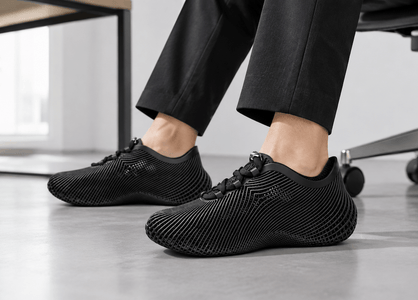
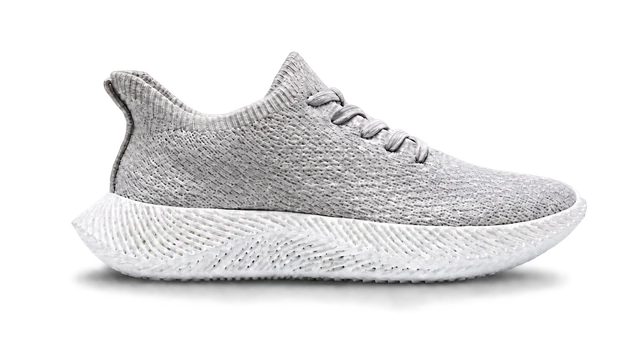
As we discussed above, flat feet lack natural, self-supporting arch structure. To bridge this gap, the best shoes for flat feet need to provide the artificial structure and motion control necessary to maintain neutral alignment. Most shoes provide that support by using additional components, such as a medial post, a rigid heel counter, and a stability plate. The Nexbie Aeroraise 3D printed sneaker takes a completely different approach. It’s a 3D-printed shoe that redesigns the internal structure of the midsole itself.
Aeroraise 3D Printed Sneakers
$159.00$229.00
- Dynamic arch support that moves with you
- Stable base for a more balanced stride
- Snug one-piece fit that helps limit shifting
- Springy lattice cushioning for daily comfort
- Lightweight support for walks and long days

Arch Support
The dynamic arch support is built to flex under weight. So, instead of rigid support, you get support that compresses as springs back as you move. Hence, the support comes from geometry, not a separate part bonded into the shoe. Aeroraise puts less strain on your arch over a long day of standing or walking.

Heel and Fit Security
Aeroraise is printed as one seamless, glue-free piece; hence, it fits snugly. This gives a secure, locked-in fit. For flat feet, this becomes more important because the foot already tends to roll inward more than it should. If the foot is also sliding around inside the shoe, that adds an extra kind of instability on top of the arch issue itself. A snug, one-piece fit is meant to keep the foot centered over the footbed, so the arch support underneath is actually doing its job in the right position, rather than the foot shifting off of it.
ASICS GEL-Kayano 32
Consistently ranked among the best running shoes for flat feet, The ASICS GEL-Kayano 32 is made for people with low arches who want high shock absorption and strong stability. When flat feet land, they often roll inward quickly, which can lead to muscle fatigue. This shoe uses a thick bed of soft foam combined with a wide base to catch your foot gently. Instead of stopping your foot abruptly, the shoe gently guides your foot forward from heel to toe. The upper mesh stretches over the midfoot so low arches do not feel squeezed.

Brooks Adrenaline GTS 25
The Brooks Adrenaline GTS 25 is one of the best shoes for flat feet because it uses a smart support setup called GuideRails. Think of GuideRails like bumper lanes at a bowling alley. If your foot steps straight, the shoe stays out of your way. But if your arch flattens and your ankle begins tilting inward, the rails offer resistance to help keep your foot aligned. This helps support your feet, knees, and hips without feeling like you are wearing a stiff orthopedic boot.

HOKA Arahi 9
Most shoes that support low arches can feel heavy, but the HOKA Arahi 9 keeps things light and smooth. It uses a firm frame of supportive foam shaped like a wide "H" underneath your foot. This frame wraps around the sides of your foot, giving low arches a solid cradle so they are less likely to sag inward. It also features a curved bottom sole, which gently rolls your foot forward into your next step, helping take stress off your arch muscles during long walks or runs.

New Balance Fresh Foam X 860 v15
If you have flat feet and need a shoe that holds up through long work shifts or high-mileage runs, the New Balance 860 v15 is the best rated running shoe for flat feet. It uses two layers of foam: a softer layer on top for comfort and a firmer layer underneath to help keep your foot from sinking inward. New Balance also offers true wide and extra-wide sizes, giving low arches room to spread out naturally without getting pinched along the sides.

What to Look for in Shoes for Flat Feet
When shopping for the best shoes for flat feet, try not to choose the softest pair in the store. Ultra-soft shoes often feel great when you first put them on, but their plush foam flattens out quickly under your body weight. This leaves low arches without steady support and offers little protection against your foot rolling inward.
Instead, look for these key design features to keep your feet comfortable and supported:
-
Adaptive or Firm Arch Support: Choose midsoles that hold their shape under pressure. A supportive base or a flexible grid helps hold low arches in a natural position throughout the day.
-
Wide Base & Roomy Midfoot: Flat feet spread outward when you stand or walk. A wide platform gives your midfoot plenty of space so it does not spill over the edge of the sole, preventing friction and sore spots.
-
Firm Heel Counter: Look for a sturdy, cup-like wrap around the back of the heel. This keeps your rearfoot steady as you land, which helps limit how much your ankle tilts inward.
-
Torsional Rigidity: Gently twist the shoe with both hands. A good stability shoe should resist twisting through the middle, providing a steady base that keeps your stride balanced on hard pavement.
Frequently Asked Questions
Q: What are the best rated shoes for flat feet?
A: The best shoes for flat feet provide arch support, stability, and wide bases. Top options include the Nexbie Aeroraise for dynamic 3D-printed arch support, the Brooks Adrenaline GTS for guided alignment, and the ASICS GEL-Kayano for maximum cushioning.
Q: Do flat feet still need arch support?
A: Yes. Even if your arch is low or flexible, supportive footwear helps distribute body weight evenly across the foot, prevents excessive inward rolling (overpronation), and reduces strain on the posterior tibial tendon and knees.
Q: What worsens flat feet?
A: Shoes that are unsupportive (such as thin sandals or totally flat canvas shoes), spending a long time on hard ground without cushioning, sudden weight gain, and aging cause weakening of the tendon structure and increase the collapse of the arch.
Q: At what age can flat feet be corrected?
A: In children, arches typically develop naturally by ages 6 to 10. In adults, flexible flat feet cannot usually be permanently "fixed" or reshaped without surgery, but symptoms and alignment can be effectively managed with supportive footwear and custom orthotics.
Q: Can I naturally fix my flat feet?
A: Although adults cannot change their skeletal structure, specific exercises for feet, like towel curls, stretches of the calf muscle, short foot exercise, etc., can develop foot muscle strength, enhance arch function, and decrease fatigue.
Conclusion
Finding the best shoes for flat feet comes down to picking support and stability over super-soft foam. Shoes with wide bases, firm heel cups, and adaptive arch support help keep your feet aligned and reduce daily strain on your joints. Whether you prefer the smart guidance of the Brooks Adrenaline, the max cushioning of the ASICS GEL-Kayano, or the flexible 3D-printed support of the Nexbie Aeroraise, the right pair makes a world of difference. Investing in proper footwear helps protect your feet, improves your comfort, and keeps you moving smoothly through every walk, run, and workout.