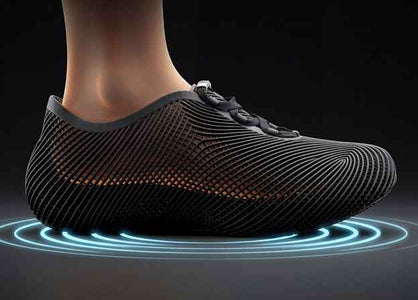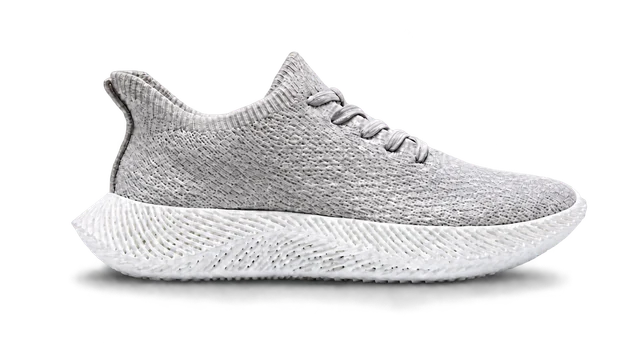


3D printed shoes have moved from novelty to competitive footwear available to everyday consumers. Leading brands are using cutting-edge 3D printing tech to develop intricate lattice structures in footwear. These shoes deliver optimized cushioning and comfort. For shoppers interested in sustainable 3D printed shoes, the production method and material choice can be just as important as cushioning and fit. From high-performance running shoes to stylish everyday sneakers, there's a growing range of options to choose from.
In this article, we will cover the best 3D printed shoes available on the market. We'll compare features, performance, and price to help you find the right pair.
Our Picks for the Best 3D Printed Shoes
1. Aeroraise 3D Printed Sneakers
Made by Nexbie, a footwear brand built on 3D-printing hardware from Creality.
If you hate the stiff, heavy feel of traditional sneakers, the Aeroraise 3D printed shoes will feel like a breath of fresh air.
Nexbie built this entire shoe as a one-piece 3D printed part. That means zero glue, zero seams, and zero stitching. Why does that matter? Because those glued joints are always the first thing to rip or fall apart on normal sneakers when you wear them every day. Without them, this shoe is tough enough to throw right into the washing machine when it gets dirty.
On-Foot Feel & Performance
When you first slip these on, the bouncy sensation underfoot is wild. Different zones of the lattice are printed with varying densities, so the arch, heel, and forefoot areas can each provide different levels of support, flexibility, or cushioning within the same single piece:
- The heel and arch feel firmer to keep you supported.
- The forefoot is softer and squishier, giving you that nice "walking on clouds" vibe.
It’s highly breathable too. Because of the open mesh-like lattice design, you can literally feel the breeze on your feet. It’s easily our new hot-weather go-to shoe for running errands or hitting the office on casual Fridays.

Price: $159 (List Price: $229)
Materials: 53% bio-based recyclable polymer ELSTO 1000
Pros:
- Dynamic 3D Arch Support
- Provides maximum joint protection
- An open lattice construction allows for drainage and airflow
- US Prop 65 & EU RoHS compliant
Cons:
- Not built for long distances or competitive running
Best for: Everyday wear in hot or humid weather, including workouts, office settings, and running errands. Where breathability and low maintenance are more important than technical running performance.
Aeroraise 3D Printed Sneakers
$159.00$229.00
- Seamless design for a smooth on-foot feel
- Targeted comfort from heel to toe
- Airy steps on warm, busy days
- Easy-care convenience for daily wear
- Made with 53% bio-based material

Who should skip it: Runners training for distance or speed (the lattice is tuned for general rebound and comfort, not race-day propulsion)
2. Adidas 4DFWD
Created by Carbon, a 3D-printing company based in Silicon Valley
If you’re curious about how 3D printing can actually make you a better runner, the Adidas 4DFWD is the shoe to look at. The midsole of 4DFWD is a full-length 3D-printed lattice with a bow-tie-shaped cell pattern.
On-Foot Feel & Performance
Unlike typical foam midsoles that just compress straight down, this bow-tie grid is engineered to convert downward impact into forward motion. When your heel strikes the ground, the shoe feels like it’s gently gliding you forward into your next step. It’s a incredibly smooth ride. Independent lab testing even found that these are 22% more flexible than your standard road running shoe, which explains why they transition so fluidly. The Primeknit+ upper hugs your foot like a premium sock, and about 39% of the 3D-printed lattice is bio-based, which is a nice win for the environment.

Price: $200
Materials: Primeknit+ upper, 50% recycled content
Best for: Neutral heel strikers running easy-to-moderate mileage daily
Who should avoid it: Racers, runners who prioritize speed
Pros:
- Real one-piece lattice midsole
- Upper made of recycled materials
- Distinct, forward-driving
- Durable rubber outsole
Cons:
- Heavier than most everyday trainers
- The midsole gets quite stiff in cold weather. One lab test found it was 21 percent firmer after 20 minutes in a freezer.
- More expensive than comparable trainers
If you’re comparing different 3D printed footwear technologies, check out our Aeroraise vs Climacool guide to see how today’s leading designs differ in comfort, cushioning, and everyday performance.
3. Nike Air Max 1000
Created in collaboration with Zellerfeld, a German 3D-printing footwear company
Let's be real: the Nike Air Max 1000 is a pure, unadulterated flex. It’s not meant for the treadmill; it’s meant to make people stop you on the street and ask, "What are those?"
On-Foot Feel & Performance
Nike teamed up with Zellerfeld to completely reimagine the legendary 1987 Air Max 1. Instead of leather and glue, they used Zellerfeld’s proprietary "zellerFOAM" TPU to print the entire shoe in one go. While the upper and body are 3D-printed, Nike did sneak their classic Air cushioning unit into the heel later on. The result? You get that wild, futuristic molded-sculpture look on top, but with the familiar, comfy underfoot feel that Air Max fans love. It's surprisingly lightweight, completely machine washable, and dries in a flash.

Price: $179 at launch (some later colorways up to $210)
Materials: 100% Recycled Proprietary Foam
Best for: Sneakerheads who want a cool, rare conversation piece instead of an everyday performance shoe.
Who should skip it: Anyone looking for everyday practicality, because this one is clearly a showpiece.
Pros:
- Lighter than traditional Air Max
- Collectible Piece
- Quick drying and machine washable
Cons:
- Very Limited Availability Sells Out in Minutes
- Priced above average for a lifestyle, not a performance shoe
- Newer, less proven long-term durability track record
4. Adidas Climacool
Developed with Carbon, using the same lattice technology family as the 4DFWD
Climacool is engineered for one purpose: to keep your feet cool. Built using the same 3D-printing tech family as the 4DFWD, this shoe is engineered with a single goal: maximum airflow.
On-Foot Feel & Performance
The entire shoe is essentially a 360-degree open-air cage. When you're walking, you can feel the air flowing under the arch of your foot and through the sides. It has a super clean, minimalist aesthetic that looks great with shorts or joggers during the summer. If you’re not into the slip-on design, there’s a newer version that includes laces over the same design for a more secure and adjustable fit.

Price: $150
Material: 100% Polyurethan
Best for: Post-workout recovery wear, commuting, travel, and everyday errands in hot weather.
Who should skip it: Anyone who needs workout stability. Reviewers also note that it lacks plates or support structures for stability during a workout.
Pros:
- Breathable 360-degree lattice design
- Excellent ventilation
- Distinctive, minimal aesthetic
Cons:
- Tight-fitting, can be difficult to put on, especially after exercising
- Not made for structured athletic support
- Minimal traction on the outsole and moderate stability only
5. ASICS ACTIBREEZE 3D Sandal
Developed with California 3D printing company LuxCreo
ASICS partnered with LuxCreo, which usually works in medical, dental, and eyewear 3D printing, to develop the Actibreeze. The Japanese design team at ASICS took its existing shoe design data and created a one-piece sandal. It has a contoured footbed that aims to maximize comfort while keeping the whole thing 3D-printed.
On-Foot Feel & Performance
The moment you slide your foot into these after a hard run or a grueling leg day, your feet will thank you. The Japanese design team at ASICS used structural foot data to print a highly contoured, extra-thick lattice bed. It doesn't just cushion your feet; it actively rebounds, absorbing the shock of walking on hard tile or hardwood floors and giving you a noticeable energy return. The extra-wide, flared base makes you feel incredibly stable when standing, and because it’s entirely open mesh, your feet cool down instantly.

Price: $80
Best for: Post-workout recovery & hot weather wear
Who’s it for: Those who need all-purpose daily shoes
Pros:
- Signature step-in comfort
- Noticeable energy return from the lattice footbed
- Outstanding breathability even in high heat
Cons:
- An open lattice design can allow debris on rougher terrain
- For light, casual, or recovery use only
- More expensive than average recovery sandal
How to Choose the Best 3D Printed Shoes
There is no single best 3D printed shoe. It depends on what you require from a shoe. Here are some factors to consider when choosing the best 3D printed shoes:
1. Unified vs. Hybrid Construction
This is the first thing you need to look at. 3D-printed footwear generally falls into two camps:
- Fully Monolithic (One-Piece): Shoes like the Aeroraise or the ASICS ACTIBREEZE are printed as a single, continuous piece of material. There is zero glue, zero stitching, and no separate upper. These are incredibly durable and usually 100% machine-washable. There are no seams to rip or split over time.
- Hybrid Build: Shoes like the Adidas 4DFWD combine a traditional fabric upper (like Primeknit) with a 3D-printed lattice midsole. You get the familiar, secure lockdown of a standard running shoe, but you still have glue holding the upper to the sole, which remains a potential wear-and-tear failure point.
2. Lattice Density & Tuning
A cheap 3D-printed shoe uses the exact same grid pattern from the toe to the heel. A premium, high-performance shoe doesn't.
Look for variable density printing. For example, the heel area should have tighter, stiffer lattice structures to absorb heavy impacts, while the forefoot should have looser, more flexible structures for an easy toe-off. If the brand doesn't mention "zoned" or "variable" density, the shoe will likely feel like a stiff block of plastic underfoot.
3. The "Gravel Trap" & Cleaning Reality Check
Because almost all 3D-printed midsoles rely on open-lattice structures for bounce and airflow, they act like absolute magnets for the outdoor world.
- The Mud & Pebble Test: If you live in a rainy area or frequently walk through gravel driveways, parks, or dirt trails, avoid wide-open grids (like the ASICS ACTIBREEZE slides). You will spend half your walk shaking out rocks and twigs.
- Material Washability: Opt for TPU or polyurethane-based prints that are rated as "machine-washable." Being able to literally hose your shoes down in the sink to clean out mud from the lattice is a massive quality-of-life feature.
4. Thermal Sensitivity
3D-printing materials (usually elastomers like TPU or proprietary polyurethanes) react differently to temperatures than standard EVA foam.
Some 3D-printed midsoles get notoriously stiff when the temperature drops. If you plan to run or walk in freezing winter conditions, check reviews for cold-weather firmness. A midsole that feels like a springy cloud in July can easily feel like solid brick in December.
5. True Sustainability vs. Marketing Hype
A lot of brands throw around the word "recyclable." But actually:
- Monolithic shoes (made of a single polymer) are genuinely easy to recycle because they don't require separating different materials.
- Hybrid shoes with glued-on uppers and rubber outsoles are incredibly difficult to recycle, regardless of what the marketing copy claims. If eco-friendliness is your top priority, go with one-piece builds.
Frequently Asked Questions
Q: Are 3D printed shoes worth buying?
A: Yes, for the majority of people. They are more breathable and comfortable, and they use more sustainable materials than regular shoes.
Q: What are the benefits of 3D printed shoes?
A: 3D printed shoes have better airflow, a one-piece build with no weak glued joints. Some brands also offer custom fit options. 3D printed shoes also have less material waste in manufacturing.
Q: Are 3D printed shoes comfortable?
A: Yes, pretty much. Printed lattice soles often have a bouncier, more supportive feel than the regular foam, but fit varies from brand to brand.
Q: How long do 3D printed shoes last?
A: Most 3D printed shoes last 2 to 5 years with regular use. High quality printed midsoles often retain their cushioning longer than EVA foam, while one-piece designs resist splitting. In most cases, the outsole tread wears out before the shoe’s structure.
Q: What are the best 3D printed shoes for everyday wear?
A: Both the Aeroraise and the Adidas Climacool are good everyday wear options, offering a comfortable, breathable, and practical option for day-to-day use.
Q: Can you wear 3D printed shoes without socks?
A: Some open-lattice designs can be worn without socks, especially when airflow and moisture management are priorities. For more practical tips, see our guide on wearing shoes without socks, including comfort and hygiene considerations.
Conclusion
3D printed shoes have come a long way from a lab experiment to a truly solid option you can wear every day. If you're looking for a gym shoe, a serious running shoe, or just a fresh look that'll get noticed, you can find a printed option out there for you. The Aeroraise is great for everyday comfort, the 4DFWD is for serious runners, and the Air Max 1000 is for collectors. Whatever you go for, you're getting a shoe that's been made with less waste and a lot more thought in its design. As the technology continues to improve, expect more brands to get involved and 3D printed shoes to become less of a novelty and more of the standard.