

In recent years, 3D printed shoes have entered the mainstream footwear market. Brands are taking different approaches to bringing the technology to market. Nexbie has built its business entirely around affordable, everyday 3D printed shoes, while Nike has used the technology to create limited, design-forward releases in collaboration with Zellerfeld. Both use additive manufacturing, but the resulting products, pricing, and purpose are very different. In this article, we compare both brands factor by factor.
Nexbie 3D Printed Shoes Overview
Nexbie started with a simple idea: to make everyday shoes not only more visually interesting but also more functional through 3D printing. Nexbie doesn't use 3D printing as a novelty, but to solve everyday problems with shoes, such as sweat, slow drying, uneven cushioning, and shoes that break down over time. The entire shoe is printed as one piece, allowing Nexbie to build performance features into the structure instead of adding them as separate materials.
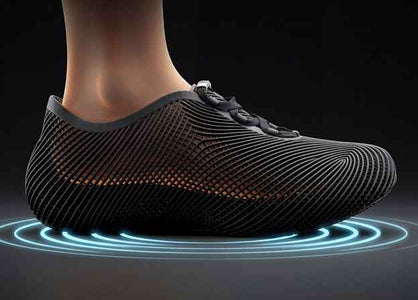
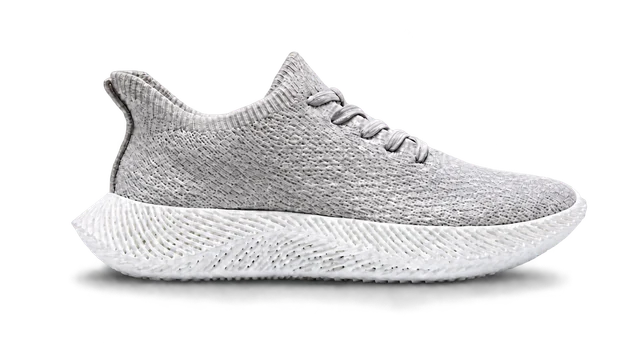
The flagship Aeroraise 3D printed sneaker uses a one-piece 3D printed lattice structure with more than 80% open space, allowing air to circulate and water to drain more easily. Its ELASTO 1000 polyurethane material provides 250% elongation and 20 N/mm tear strength, while testing the structure through more than 100,000 flex cycles.
Unlike traditional sneakers assembled from separate uppers, midsoles, outsoles, and adhesives, Nexbie builds key functional features directly into the shoe’s structure. This approach reduces the need for multiple layers while creating zones for airflow, cushioning, flexibility, and support.
- For everyday use: Not just special drops.
- Designed to solve real-world problems: Such as moisture, odour, and wear and tear.
- One-piece construction: Traditional layered shoe making is replaced by one-piece construction.
- Everyday alternative: Marketed as an everyday alternative to traditional trainers, not as a fashion collector's item.
Nike 3D Printed Shoes Overview
Nike's approach begins from a different place. Nike does not use 3D printing to remake its manufacturing, but to push its design limits while still keeping its product identity, especially with the Air Max range. The goal isn't everyday practicality. It's using additive manufacturing to make shapes and structures that traditional shoemaking can't easily produce while keeping the brand's signature cushioning technology intact.
- Design tool: Not a full manufacturing revolution, but a design tool for 3D printing.
- Limited-edition releases: Concentrated on limited-edition, drop-style releases instead of ongoing retail presence.
- Air cushioning heritage: Merges Nike's air-cushioned heritage with new printing technology.
- Collectible positioning: Marketed as a collectible, fashion-forward product rather than as a functional everyday shoe.
Nexbie vs Nike 3D Printed Shoes: Quick Comparison
|
Comparison Metric |
Nexbie 3D Printed Shoes |
Nike 3D Printed Shoes (Air Max 1000) |
|
Manufacturing Tech |
HALS/DLP (Creality) |
Fused Filament Fabrication (Zellerfeld) |
|
Core Materials |
Innovative PU |
Recyclable TPU (zellerFOAM®) + Pressurized heel Air unit |
|
Structure & Cushioning |
80% hollow 3D dynamic lattice (zonal arch support & heel bounce) |
Variable-density TPU printed body + Hybrid Nike Air cushion |
|
Breathability & Drainage |
360° open airflow lattice |
Enclosed upper with targeted ventilation cutouts for thermal release |
|
Maintenance & Cleaning |
Machine-washable |
Spot-clean by hand |
|
Primary Use Case |
All-day walking, gym workouts, travel, and wet/outdoor recovery wear |
Lifestyle fashion, urban casual wear, and sneakerhead collecting |
|
Price Range |
$60 – $159 USD (direct purchase) |
$180 – $210+ USD (limited drops & resale) |
|
Availability |
In-stock, direct-to-consumer online retail |
Limited pre-order runs, raffles, and SNKRS drop releases |
Key Difference Between Nexbie and Nike 3D Printed Shoes
Production Process
- Nexbie: Nexbie’s manufacturing is based on Creality’s industrial printing technology. Instead of building the shoe layer by layer, liquid polyurethane-urea resin is continuously solidified in a vat using light, allowing the entire shoe to be printed as one seamless piece. The material cures into a tough, rubber-like solid that is non-yellowing, hydrophobic, and capable of withstanding more than 100,000 flex cycles without cracking or losing support.
- Nike: Nike partners with Zellerfeld, which uses a filament-extrusion process. Shoes such as the Air Max 1000 are printed using flexible TPU plastic that is melted and extruded through a nozzle. The printer builds the shoe layer by layer, varying the thickness to create the upper, sole, and lace-free collar as a single structure. Once the printed body has cooled, Nike manually inserts its signature pressurised Air unit into the heel to complete the shoe.
Core Technology
-
Nexbie: Nexbie uses a fully 3D-printed lattice made from flexible resin instead of traditional foam. The lattice varies in density throughout the shoe, remaining softer under the heel for impact absorption and firmer under the arch for support. Rather than relying on thick foam that gradually compresses with use, the printed lattice flexes and springs back with every step, helping maintain its cushioning over the long term.

- Nike: Nike uses a hybrid approach. The upper is 3D-printed for structure and fit, while the brand’s signature Air unit cushions the heel. It combines the design versatility of 3D printing with the familiar comfort of Air Max technology, delivering a blend of modern manufacturing and classic Nike comfort.
Breathability
-
Nexbie: Nexbie’s Aeroraise 3D printed sneakers with an open lattice feature airflow channels throughout the structure, allowing air to circulate freely from multiple directions. The resin is non-absorbent, so moisture drains through the open design instead of becoming trapped inside. As a result, the shoes dry much faster than conventional trainers after washing or getting wet.

- Nike: Nike’s printed design has a more enclosed structure while still being engineered for everyday comfort with improved airflow. Ventilation openings help dissipate heat while maintaining a more traditional sneaker appearance. Although breathable for daily wear, the design is not intended to drain water or dry as quickly as Nexbie’s open lattice.
Design & Silhouette
- Nexbie: Nexbie does not attempt to imitate traditional trainers. Instead, it designs its footwear around the capabilities of 3D printing. The lattice design creates a lighter shoe with less bulk and a clean, low-profile aesthetic. The range includes models for walking, travel, recovery, and casual wear, with comfort taking priority over making a fashion statement.
-
Nike: Nike is not reinventing the Air Max silhouette but modernising it through 3D printing. Sculpted lines, a thick sole, and the visible Air unit create a bold, futuristic look while maintaining the signature style that Air Max fans recognise.

Durability & Care
- Nexbie: Each Nexbie shoe is made as a single piece, eliminating glued layers that could separate over time. The resin does not crease, does not absorb sweat, and can be easily cleaned with water. Most dirt washes off easily, making the shoes simple to maintain for everyday use.
- Nike: Nike’s printed construction also removes many of the seams found in conventional trainers, helping reduce creasing. The printed structure is durable enough for everyday wear, but the exposed Air unit should be cleaned with greater care. In general, spot cleaning is recommended over machine washing.
Best For
- Nexbie: Nexbie is designed as an everyday shoe. It is well suited for walking, travel, post-workout recovery, or any activity where the shoes might get wet. Its lightweight, fast-drying design and easy maintenance make it practical for everyday use with minimal upkeep.
-
Nike: Nike’s 3D-printed trainers are lifestyle shoes that blend innovative manufacturing with the iconic Air Max design. They are better suited for casual wear, city walking, and people who enjoy collecting or wearing unique trainers rather than those looking for a utility-focused everyday shoe.

Price & Availability
- Nexbie: Most Nexbie models sell for between $60 and $150, reflecting the brand’s focus on the mainstream market. They are available through standard online retail channels, so there is no need to enter raffles or wait for limited releases.
- Nike: Nike’s 3D printed shoes are typically produced in smaller runs and retail for around $180 to $210. They are often available only through raffles, pre-orders, or limited SNKRS releases, making them harder to buy at retail and more likely to sell out quickly.
Final Decision: Which One Should You Choose?
Nexbie
Nexbie brings real manufacturing expertise to footwear, supported by Creality, one of the biggest names in industrial 3D printing. The brand makes shoes using HALS/DLP technology, designed for function as well as form, tested for flex-cycle durability, cushioning performance, and everyday wearability, not just looks.
Nexbie is also designed and priced for mass, everyday accessibility rather than scarcity. But the trade-off is that while it's a good-looking shoe, it's more practical than attention-grabbing. It won't turn heads like a Nike collaboration silhouette would, and it's not necessarily for dressier or more style-conscious occasions.
Nike
The Nike shoes are 3D printed using Zellerfeld's printing accuracy combined with Nike's design language and Air cushioning heritage. The process even includes a foot scan for a more personalised fit, taking the technology from looks to actual performance personalisation.
But where Nike really shines is in desirability. Limited runs mean that each pair has a high collector and resale value, making the shoes something with cultural and monetary value more than just a function. But that same exclusivity is also the catch: the limited sizing and quick sell-outs make the shoes harder to treat as a dependable, everyday pair.
Conclusion
Ultimately, the choice between these two brands comes down to practicality versus exclusivity. Nexbie focuses on producing affordable everyday shoes with water-friendly performance, excellent ventilation, and easy maintenance through continuous resin printing. Nike, on the other hand, combines Zellerfeld’s TPU extrusion process with its signature Air heel unit to create a premium, limited-release lifestyle sneaker. If you want a practical shoe for daily walking, travel, and recovery, choose Nexbie. If you prefer limited-edition design, collector appeal, and a modern interpretation of the classic Air Max, choose Nike.