

Foot pain rarely stays in the foot. A collapsed arch, or one that's too rigid, changes how force travels up through your ankles, knees, and lower back, which is why picking the right shoe matters more than most realise. If you've dealt with aching arches after a long day, or you're tired of shoes that look supportive but do nothing, this guide is for you.
We'll cover why arch support matters and how to match the right level of support, cushioning, and stability to your specific foot shape. We’ll share the best arch support shoes worth your money in 2026.
Why Arch Support Matters
Not all feet are built the same, and that's the part most shoe ads skip.
High Arches
A high arch doesn't absorb enough shock, so impact lands hard on the heel and ball of the foot. This shows up as:
- Pain in the heel or forefoot after standing or walking
- Ankle instability, since high arches tend to roll outward
- Calluses along the outer edge of the foot
Flat or Low Arches
A flat or low arch falls inward with each step, called overpronation, which throws alignment off up the leg. Common effects include:
- Arch and inner-ankle discomfort
- Knee or hip strain from misalignment
- Fatigue that builds steadily over a long day
Wearing the wrong shoe for your arch type isn't just uncomfortable; it can contribute to plantar fasciitis and fatigue over time. That's why the best shoes for arch support keep coming up in podiatrist recommendations: they solve a mechanical problem, not just a comfort one.
The 5 Best Arch Support Shoes
Here are five of the best arch support shoes available right now, each suited to a different foot type or use case.
1. Nexbie Aeroraise — Best for All-Day Standing Support
Best for: people on their feet all day who need active, zoned support that doesn't break down or collapse under constant weight.
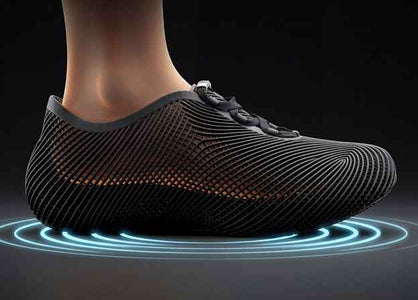
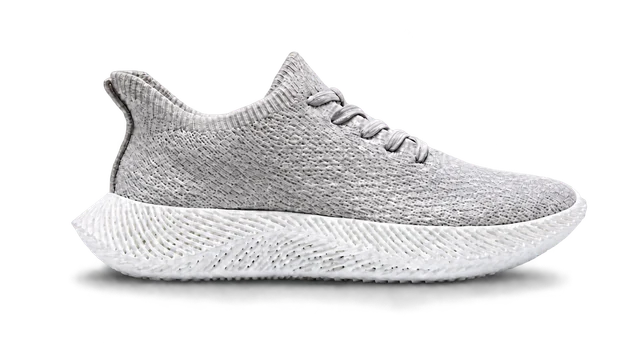
The Aeroraise skips the standard glued-in foam layers entirely for an advanced one-piece 3D lattice structure. Instead of using a uniform cushioning throughout the whole shoe, it features targeted, zoned lattice support. High-density lattice areas under the midfoot provide a solid, structured lift to the arch, and lighter-density areas dynamically cushion high-impact areas under the heel and forefoot.
The shoes are manufactured as one seamless, integrated unit with no separate glued inserts or rigid plastic shanks. The design gives you that “soft and responsive without collapsing” feel that keeps your arch in place properly without flattening out during those long shifts. Additionally, The open lattice design also allows moisture and heat to drain away quickly, keeping your feet fresh all day long.

Key specs: 3D Lattice Arch Support Elastic slip-on · ELASTO-1000 lattice · HALS 3D printing (DLP-based) ·
Pros: lattice support resists compression · breathable · lighter than cushioned shoes
Cons: Sizing runs large · Not built for serious running mileage
2. Brooks Ghost 17 — Best Arch Support Running Shoe
Best for: runners who want cushioned, dependable arch support mile after mile.
The 17th version's DNA Loft v3 midsole is nitrogen-infused, spreading impact more evenly instead of concentrating it under the heel. Brooks also dropped the heel-to-toe offset from 12mm to 10mm, reducing load through the arch and into the knee. Some wearers report the arch support pressing too firmly against the heel side, so trying it on matters here. One useful detail for Medicare-covered footwear: the Ghost 17 is PDAC A5500-approved, qualifying as an extra-depth shoe.

Key specs: 10mm drop · 10.2oz (men's) / 8.8oz (women's) · four widths
Pros: even shock absorption · four widths available · doubles as a walking shoe
Cons: heavier than most daily trainers · narrow toe box
3. HOKA Bondi 9 — Best for High Arches
Best for: high, rigid arches that need cushioning to absorb shock before it reaches the foot.
High arches don't compress much on their own, so shock travels straight into the heel and forefoot — the problem the Bondi 9's midsole is built to intercept. Its supercritical EVA foam is lighter and more responsive than HOKA's older foam, and the J-Frame limits excess inward roll without forcing a correction like a rigid stability post would. A tester who wore it through 12-hour standing shifts credited the shallow 5mm drop for keeping weight balanced. It also holds the APMA Seal of Acceptance.

Key specs: 5mm drop · 43mm/38mm stack · 10.5oz (men's)
Pros: maximum cushioning · APMA-certified · stable despite the tall stack
Cons: narrow toe box · takes adjustment if you prefer lower-profile shoes
4. New Balance 860 v15 — Best Arch Support Shoes for Flat Feet
Best for: flat feet and overpronation that need active correction, not just cushioning.
Most stability shoes rely on a medial post — a firmer wedge under the arch that resists compressing more than the rest of the midsole. The 860 v15 instead uses a stability plane: a thin, asymmetrical plate between two foam densities that guides the foot rather than blocking it. Testers describe the feel as closer to a guardrail than a straitjacket. This version targets feet that roll inward mid-stride, a problem a standard medial post doesn't fully address. The tradeoff: they're one of the heavier trainers.

Key specs: 6–8mm drop · ~11.7oz (men's) · narrow to extra-wide
Pros: real structural correction · widest range of widths here · works for walking or easy running
Cons: one of the heavier shoes here · not built for speed work
5. Skechers Arch Fit — Best Budget Pick
Best for: everyday comfort and certified arch support without running-shoe pricing.
The Arch Fit insole isn't a generic add-on — Skechers built its shape from roughly 120,000 unweighted foot scans collected over 20 years, aiming for a footbed that rises in the righ place under the arch instead of just adding softness. It's fully removable, so it moulds to your foot and can be swapped for a custom orthotic later. Many Skechers Arch Fit styles have earned the APMA's Seal of Acceptance, granted only after podiatrists review the design. The tradeoff: it's built for daily wear, not training miles.

Key specs: removable, podiatrist-certified insole · APMA Seal of Acceptance
Pros: APMA-certified · removable insole · wide range of styles, including women's fits
Cons: not built for running or high-impact use · less correction than dedicated stability shoes
How to Choose the Right Arch Support Shoes
Picking one of the best arch support shoes here is a good start, but fit comes down to your own foot.
- First, figure out your arch type: wet your foot and step onto a dry surface or paper bag. A full print means flat arches; a thin sliver connecting heel and toe means a high arch.
- Then match the feature to the problem — flat feet need structured stability, like a medial post; high arches need cushioning that absorbs shock.
- The heel cup should feel snug and the insole removable, so you can swap in an orthotic later. That's what separates the best shoes with arch support from ones that only look supportive on the shelf.
FAQs
Q: What are the best arch support shoes for women?
A: Most shoes here, including the Brooks Ghost, New Balance 860, and Skechers Arch Fit, come in dedicated women's sizing.
Q: How do I know if a shoe has good arch support?
A: Look for a footbed that rises under the middle of your foot, a firm heel cup, and a sole that resists twisting.
Q: How do I choose the right arch support shoes?
A: Match the shoe to your arch type, then factor in your main use — running, standing, or everyday wear.
Q: How do I know if I need arch support?
A: Pain in your heel, arch, or ankles after standing, or shoes wearing unevenly, signals your footwear isn't doing its job.
Conclusion
Arch support isn't a marketing checkbox. It's the difference between a shoe that quietly does its job and one that leaves you sore by mid-afternoon. Whether you land on the Brooks Ghost for running, the HOKA Bondi for high arches, or the Aeroraise for a full day on your feet, the right pick comes down to matching the shoe to your arch. Start with your arch type, and the rest falls into place.