

There is a quiet revolution going on in the global shoe industry. 3D-printed footwear is surging, with an estimated market size of USD 549.13 million. Meanwhile, Crocs have been a crowd favorite for over two decades, beloved for their comfort and signature silhouette. But both types of footwear are based on totally different materials and engineering principles. In this article, we’ll break down the game-changing material behind the next generation of 3D-printed shoes and how it stacks up against the tried-and-tested foam that built a global brand.
What Are 3D Printed Shoes?
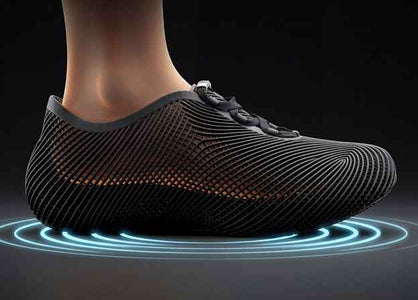
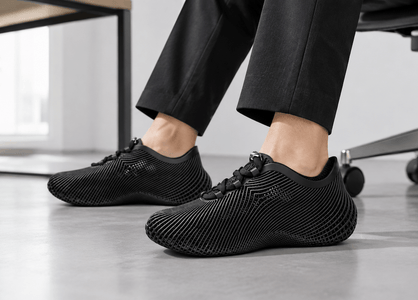
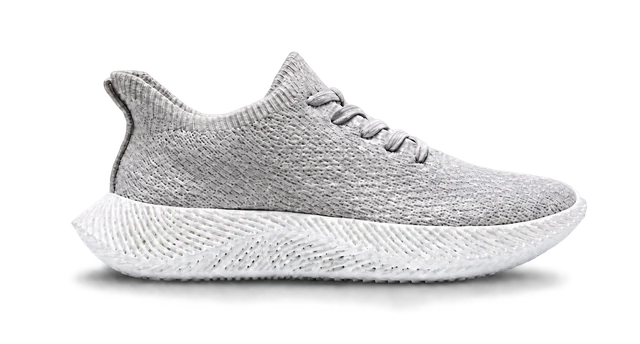
3D printed shoes are made layer by layer using additive manufacturing. The most distinct feature of 3D printed shoes is their lattice structure found in the midsole. What began as a niche manufacturing experiment has piqued the interest of big brands like Adidas and Nike and is gradually working its way into everyday shoes.

What Are Crocs?
Crocs have been around since 2002 and have gone from a polarizing beach shoe to a global icon. Crafted from their signature Croslite material, they won people over with their lightweight feel, easy slip-on style, and surprisingly comfy fit.

What makes it stand out is its chemical structure. It makes it more durable, flexible, and resistant to aging. Simply put, it's built to perform consistently over a long period of time, not just when the shoe is new.
How Each Shoe Is Made: Injection Molding vs FDM Printing
Injection Molding
Crocs are made using a process called injection molding. Croslite is heated to a liquid state. The liquid is then injected under high pressure into a pre-made mold that is the exact shape of the shoe. When the mold cools and hardens, it opens, and the shoe pops out as a single piece. The process is:
- Fast,
- Consistent,
- and cheap to run at scale.
This is a big reason Crocs can be made in the millions and sold at an accessible price point. But because each shoe is made from the same mold, structurally they are the same, with the same density and stiffness all over, and so there’s no room for variation or customization.
Additive Manufacturing
AAdditive manufacturing is a completely different process from injection molding. Instead of pouring material into a mold, the shoe is built from scratch using a digital design file. If you want to understand additive manufacturing vs subtractive manufacturing, the key difference is how material is added or removed to create the final shape. Different technologies are used in this process:
- FDM (Fused Deposition Modeling)
- SLA (Stereolithography)
- SLS (Selective Laser Sintering)
- DLP (Digital Light Processing)
- And more advanced variants like HALS DLP are used by Nexbie.
They all share the same core advantage: the density and geometry. Also, the structure of the shoe can vary across different zones: softer in some areas, firmer in others, all in a single build.

3D Printed Shoes vs Crocs: A Comparison
Material
- 3D Printed Shoes: 3D printed shoes are made from polyurethane-urea. Polyurethane-urea is an elastomer, not a foam like EVA. It stretches, absorbs stress, and springs back to its original shape without permanent deformation.
- Crocs: Crocs are made of Croslite, a closed-cell foam resin, which is a proprietary material. While the exact formula is not disclosed by the company, many independent researchers believe that Crocs are made of EVA (Ethylene-Vinyl Acetate). It is a versatile material that has been an industry standard for decades. It is lightweight and flexible, providing excellent cushioning and shock absorption.
But it has some limitations. One of the concerns associated with EVA is off-gassing volatile organic compounds (VOCs), which are classified as a 1B reproductive toxic substance.
Breathability
- 3D Printed Shoes: 3D printed shoes have an open lattice structure that creates true three-dimensional airflow channels around the foot. This allows the heat and moisture to escape naturally with every step.
- Crocs: Crocs use Croslite, a proprietary closed-cell resin foam developed for lightweight comfort. It is designed to be soft, flexible, and suitable for everyday wear.
Cushioning and Energy Return
- 3D Printed Shoes: The lattice structure of 3D printed shoes functions like a spring; it compresses under load and gives energy back to the foot. Different zones can have different levels of cushioning depending on design.
- Crocs: Crocs use foam cushioning that feels soft and comfortable from the start, designed for casual, everyday use.
Durability
- 3D Printed Shoes: 3D printed shoes are designed to hold their shape for a long time. The material used in 3D printed shoes resists permanent compression better than foam.
- Crocs: Crocs are durable for everyday casual use. However, like most foam footwear, the cushioning can slowly reduce with long-term use, even if the shoe still looks fine from the outside.
Sustainability
- 3D Printed Shoes: 3D printed shoes are highly sustainable due to their zero-waste manufacturing and use of recyclable and biodegradable materials.
- Crocs: Croslite is believed to be EVA-based, which is classified as a Type 7 plastic. Most municipal recycling programs cannot process this category.
Nexbie's 3D Printed Shoes: Where Technology Meets Comfort
Nexbie is a premium 3D printed footwear brand that uses HALS printing technology. It is a high-accuracy variant of Digital Light Processing that cures Polyurethane-Urea resin layer by layer into one seamless structure without glue, stitching, or weak points of assembly. Each pair of shoes is certified with both EU REACH and US CP65 certifications, two of the most stringent material safety standards in the European and American markets.
AeroCloud 3D Printed Slippers

The AeroCloud 3D printed slipper is made for active recovery. Whether you’re coming off a long shift, a workout, or a full day on your feet, it’s designed to give your body the reset it needs.
- The wide toe box allows your foot to splay naturally, reducing pressure buildup across the forefoot.
- Pressure-mapped recovery footbed targets specific muscle zones under the foot.
- Active 360° airflow lattice vents heat and moisture in real time.
- Water & sand release design drains immediately on contact.
Cloud 3D Printed Slippers

The Cloud 3D printed slippers are all about one problem that foam slippers never really solve: hygiene. Most slippers trap heat and moisture against the foot, creating the ideal conditions for bacteria to thrive. The Cloud is designed to prevent that from the ground up.
- The 80% open lattice structure eliminates the warm, damp microenvironment that causes odor. The antimicrobial lattice prevents bacteria from taking hold, meaning the shoe stays fresher for longer without any additional maintenance.
- Cloud Flex cushioning delivers maximum softness underfoot without sacrificing the open structure that keeps the shoe breathable.
- At 20 N/mm, tear strength against an industry average of 12–18 N/mm, it is meaningfully stronger than the foam slippers it replaces.
- It is fully machine washable.
How to Choose Between 3D Printed Shoes and Crocs
Here are some factors to consider when choosing between crocs and 3D printed shoes:
Cost
Crocs are the more affordable option upfront, typically ranging from $30 to $70. 3D printed shoes start around $69 and up, depending on the brand and technology.
Accessibility
Crocs are sold in thousands of retail stores around the world in a wide range of sizes and colorways. 3D printed shoes are still relatively new, so you’ll mostly find them online. Store availability may differ by brand and region.
Comfort
Both are comfortable, but in different ways. Crocs provide soft and immediate cushioning, so it feels good right away. 3D printed shoes are more structured, comfortable, supportive, and breathable, especially for longer wear.
Customizability
Crocs offer cosmetic customization with Jibbitz charms and colors. 3D printing allows for higher design freedom, geometry, density, and cushioning zones.
Frequently Asked Questions
Q: What are the main differences between 3D printed shoes and Crocs?
A: The difference is mostly in material and structure. Crocs use closed-cell EVA foam, while 3D printed shoes use an open polyurethane-urea lattice. This difference affects breathability, durability, and hygiene significantly.
Q: Are 3D printed shoes more comfortable than Crocs?
A: They’re a different kind of comfort. Crocs are soft, but they wear out over time. 3D printed shoes provide structured and consistent support that lasts a long time.
Q: How long do 3D printed shoes last?
A: The lifespan of 3D printed shoes depends on the material and usage, but usually they can retain elasticity for 2-3 years.
Conclusion
Both Crocs and 3D printed shoes are comfortable and easy footwear. But they do it through very different materials and manufacturing processes. 3D printed shoes offer longer-lasting cushioning and better breathability. While crocs keep it simple with soft foam cushioning that feels good right off the bat.
Both are for different use cases, so there is no clear winner. Which one is right for you depends on how often you wear them and what features you prioritize in footwear.